Hidden Kingdoms Shifting Worlds 2026
The text introduces *Hidden Kingdoms Shifting Worlds*, a long-term art and research project (2015–present) based at the artist’s studio and the Centre for Bacterial Cell Biology (CBCB), Newcastle University. To date, there have been two exhibitions of Hill’s paintings and films (2018 and 2022), both held at the CBCB.
The work examines the painting’s nature by tracing its origins and sources. Below, Dr Richard Daniel of the CBCB offers his appraisal of the project. A selection of works is displayed in non-chronological order in the media gallery and can be viewed in detail using the links below and in the homepage slideshow. A selection of paintings from the collection is available for viewing at the CBCB by appointment.
At the core of the work is a rich amalgam of skills, sources, resources, and lived experiences, both past and present. Alongside extensive research, the paintings embody key elements of the project, including its origins in a life‑threatening GAS infection that first inspired the collaboration.
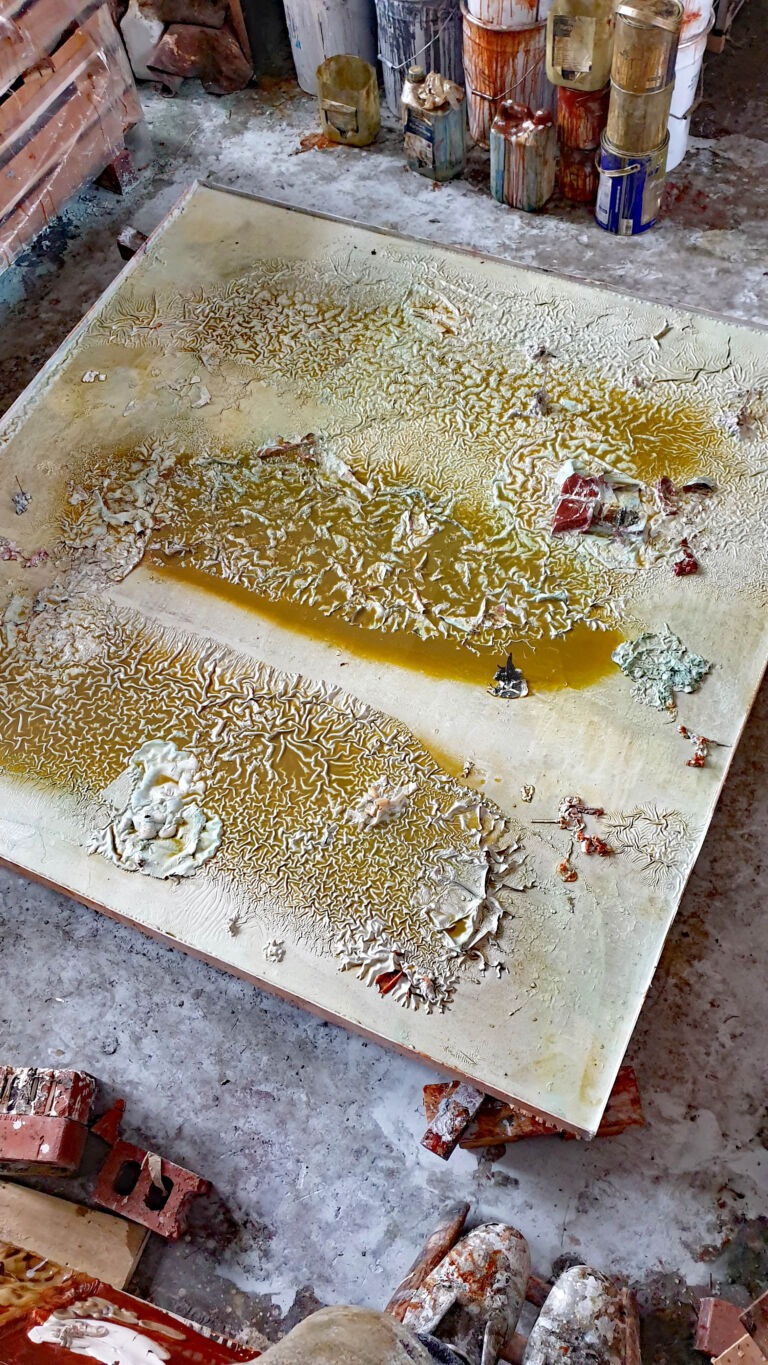
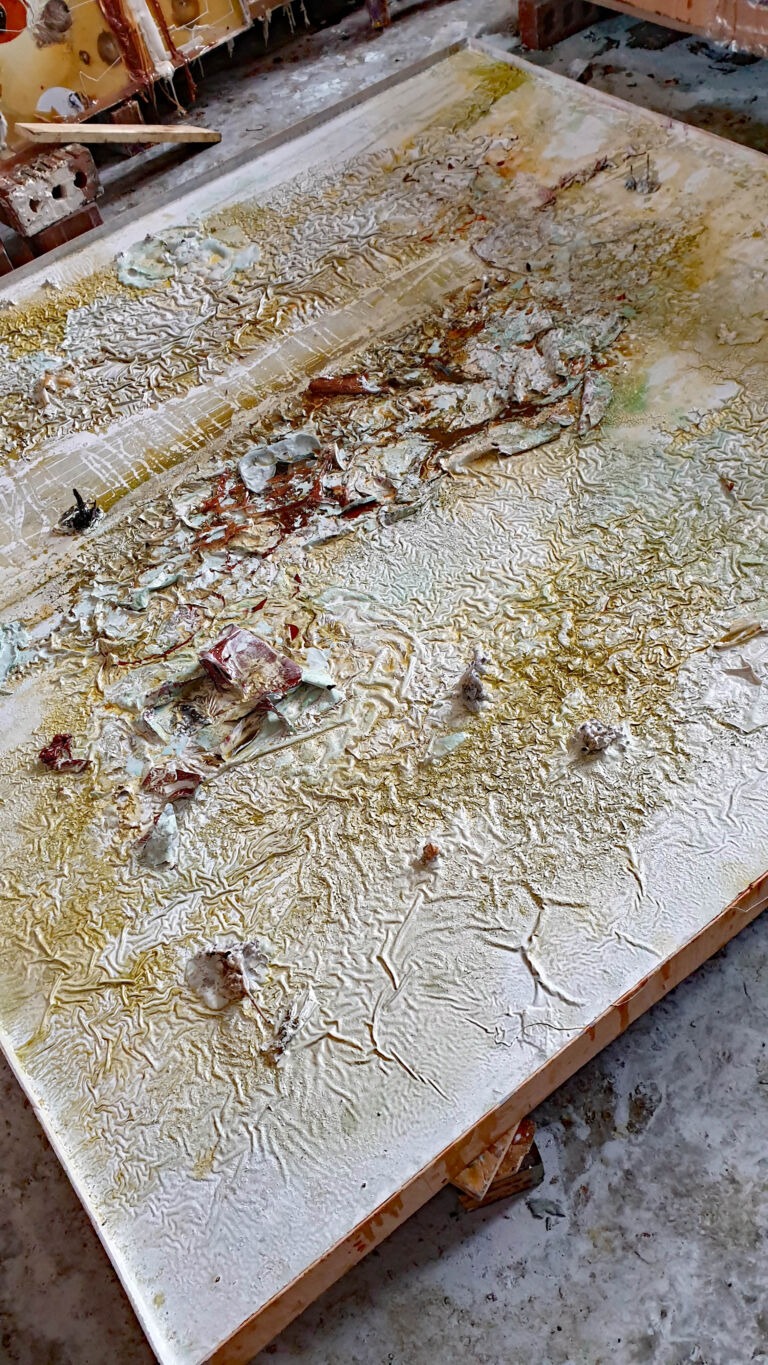
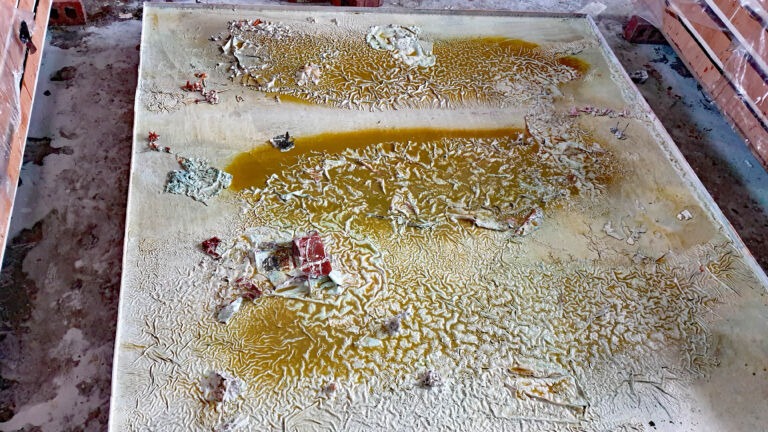
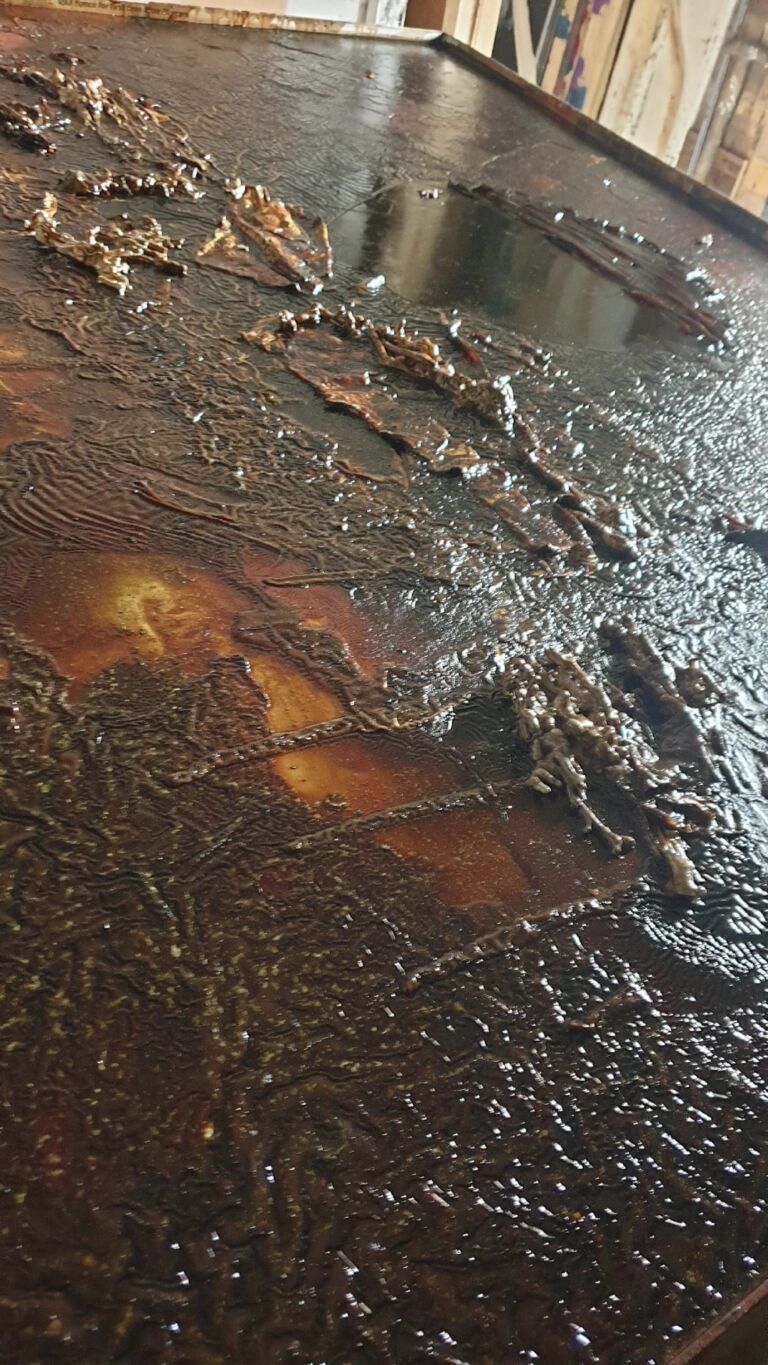
The paintings draw on both conflict and interaction, forming a high‑intensity, reactionary struggle for life. They stage confrontations between life and death, human and machine; each work becomes an impassioned, almost heroic encounter. The canvas is treated as a battlefield or operating theatre, where the raw, relentless fight for survival—echoing microbial and industrial processes—is enacted through an equally frenetic, resource‑heavy painting process. The artwork incorporates a composite of high‑grade and electro‑grade solvents with opposing retardants; oil‑based inks, oil‑ and water‑based paints, and mineral powders, including copper sulphate. The painting seeks to evoke a sense of purity and beauty by capturing life in its raw, unfiltered form, echoing research into the identities and behaviours of bacterial strains and communities.
It is inevitable that the art remains true to its integrity by opening itself to multiple strands of interpretation for diverse audiences everywhere to engage with. Importantly, the work invites curatorial collaboration, enabling it to be presented within the broader context of the public domain, where perceptions of art and science are, and always will be, central to existence and civilisation.
The project reflects on the dynamics of connection and trauma as a powerful source of inspiration. The sophistication of the microbial world serves as a lens for reflecting on our human world, on ourselves—both as individuals and communities—and on the effects of life-changing experiences in any context. *Hidden Kingdoms, Shifting Worlds* invites audiences to engage with both art and science, and to discover for themselves a realm of interaction and hidden qualities. Below, Dr Richard Daniel appraises Hill’s artwork and research from a scientific perspective, in relation to CBCB research as a whole. *Hidden Kingdoms, Shifting Worlds* is a title that encompasses a wide range of sources for artwork. It also refers to bacterial cell function and strains—communities of bacteria whose interactions generate patterns of behaviour that are fascinating to observe in time-lapse sequences. Cell structure and function are underpinned by “building blocks” or “scaffolding”: a complex, continually evolving process of construction and restructuring. Derek Hill and the CBCB by Dr Richard Daniel As our collaboration has progressed, a clear synergy has developed, despite our different perspectives on the artwork that’s generated. Dr Richard Daniel, March 2026 Co-collaborator and Senior Lecturer, Centre for Bacterial Cell Biology Dr Outi Remes, Head of Exhibitions at South Hill Park, curated the exhibition, Flaw: The New Work, featuring John Millard, the former manager of Liverpool and Newcastle Museums. Dr Davy Smith highlights the Hidden Kingdoms Shifting Worlds Exhibition 2022 in his accompanying article. John Millard Review for Shifting Worlds Exhibition 2018: https://www.derekhill.co.uk/work/cat/hidden-kingdoms-shifting-worlds/ Dr Outi Remes: https://www.derekhill.co.uk/shifts-in-time-a-journey-2/ Dr Davy Smith Review for Hidden Kingdoms Shifting Worlds Exhibition 2022: Hidden Kingdoms Shifting Worlds: https://www.derekhill.co.uk/work/cat/hidden-kingdoms-shifting-worlds/ Artist at the CBCB, Newcastle University: https://www.derekhill.co.uk/work/cat/artist-at-the-cbcb/ Hidden Kingdoms Shifting Worlds YouTube Video Shorts Playlist: https://youtube.com/playlist?list=PLQteKPuE8QuOHNERlXBbHc7deFr0kzv9k&si=GkSYoTHatwnvnMDJ Artist at the CBCB, Animation Films of Lab Research: https://youtube.com/playlist?list=PLQteKPuE8QuMw3F65_zb1p3AtYoQo0xNq&si=Tz2XmMniZzEbJtk7
>My understanding of bacterial growth and how that impacts the organism’s interaction with its environment is focused primarily on the individual cell and molecular processes, whereas Derek has an eye for the population level and how that changes with cell density, interactions, and the action of antibiotics. All of these processes result in characteristic patterns and structures that have fascinating parallels with the art Derek generates.
From my perspective, the bacterial cell is encased in a set of protective layers that have differing properties. These layers are dynamic and are modified in response to both the environment and communication between the individual bacterial cells. This ultimately results in a complex microbial community (biofilm) that has surface properties that result in the formation of colonies with patterned surfaces. In this respect, there are significant parallels to the “significantly larger” canvases that Derek generates. Here, his application of different materials and paints results in surface features that develop over time, generating wrinkles and deformations. This process Derek has exploited, combined with solvent incompatibility and slow evaporation, to obtain textures and colour variations that in many ways mimic biology, but at a scale that can easily be appreciated. A consequence of this is that although I appreciate the visual components of his work, I am equally fascinated by how the result was achieved, an aspect of his artistic process that is difficult to present to an audience in real time. In this respect, our collaboration has provided a way to link scientific research and art that are mutually beneficial. Of these, the key one has been the inspiration to develop experimental approaches that have visual results and devise new ways to present visual images and concepts. Derek’s inquisitive approach to understanding biological processes and visualising bacterial growth and interaction in real time has resulted in further synergies between his work and my research. Here, the application of time-lapse imaging, both at the micro- and macroscopic level, gave an appreciation of the interaction of microbes and how “small-organic” processes culminate in visual textures and features. (These features further reinforce the parallels that can be seen in many of the current Derek’s projects.)
The ultimate aim of our work is to generate material that “intrigues the viewer” into their own interpretation of the processes involved, and to use this to extend understanding of both the microbial world and artistic interpretation.
Newcastle University Biosciences Institute, Baddiley-Clark Building, NE2 4AX